
Where is Mount Kilimanjaro Located?
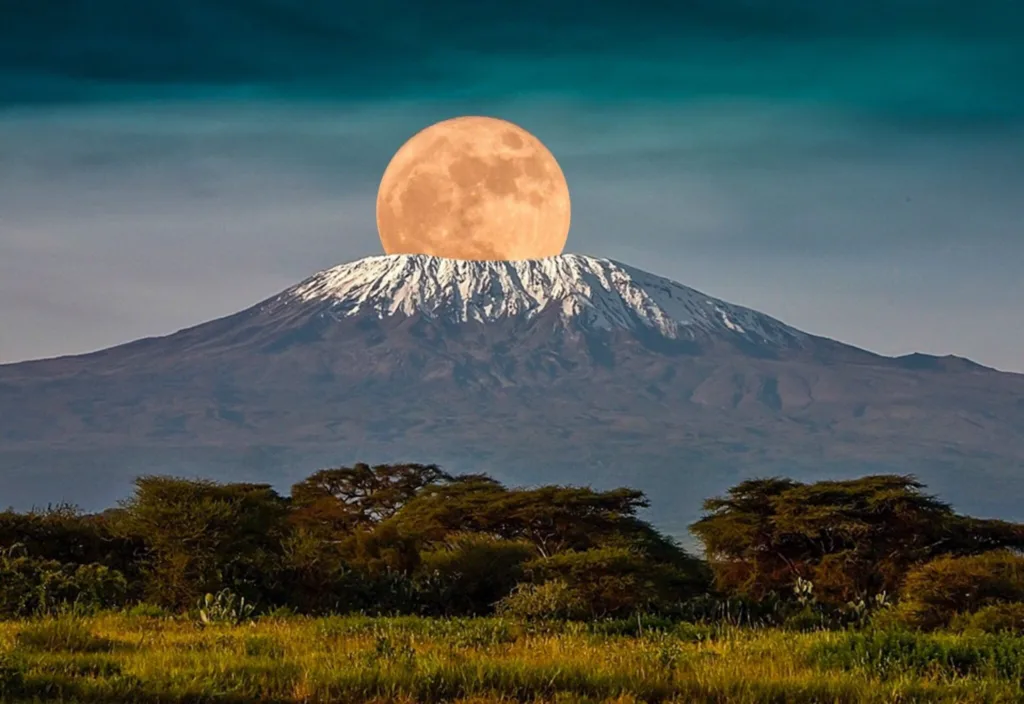
Where is Mount Kilimanjaro Located? A Complete Guide by Tanzania Safari Experience
Mount Kilimanjaro is situated in northeastern Tanzania, East Africa, standing as a majestic, free-standing volcanic giant entirely within Tanzanian territory, just a short distance south of the Kenyan border.
Understanding the Heart of Africa’s Highest Peak
Mount Kilimanjaro is located in the Kilimanjaro Region of Tanzania. It sits approximately 200 miles south of the Equator, dominating the landscape as the tallest mountain in Africa and the world’s highest free-standing mountain.
When we guide travelers at Tanzania Safari Experience, the first thing they notice is how the mountain doesn’t belong to a range; it rises abruptly from the surrounding plains. This isolation is exactly why it is so visible from miles away on a clear day.
Geographical Placement and Accessibility
Mount Kilimanjaro is positioned at roughly 3°S latitude and 37°E longitude. Its proximity to major regional hubs makes it uniquely accessible for international travelers.
Proximity to Cities: It is roughly 130 km from Arusha and about 45–60 minutes by car from Kilimanjaro International Airport (JRO).
The Gateway: Moshi is the primary town where most climbing expeditions begin, offering a vibrant culture and the necessary infrastructure to prepare for the ascent.
Pro-Tip from our team: If you are flying in, aim for a window seat on the right side of the plane if arriving from the north, or the left if coming from the south. On a clear day, you get an unmatched aerial view of the Kibo crater before you even land.
The Unique Ecological Zones
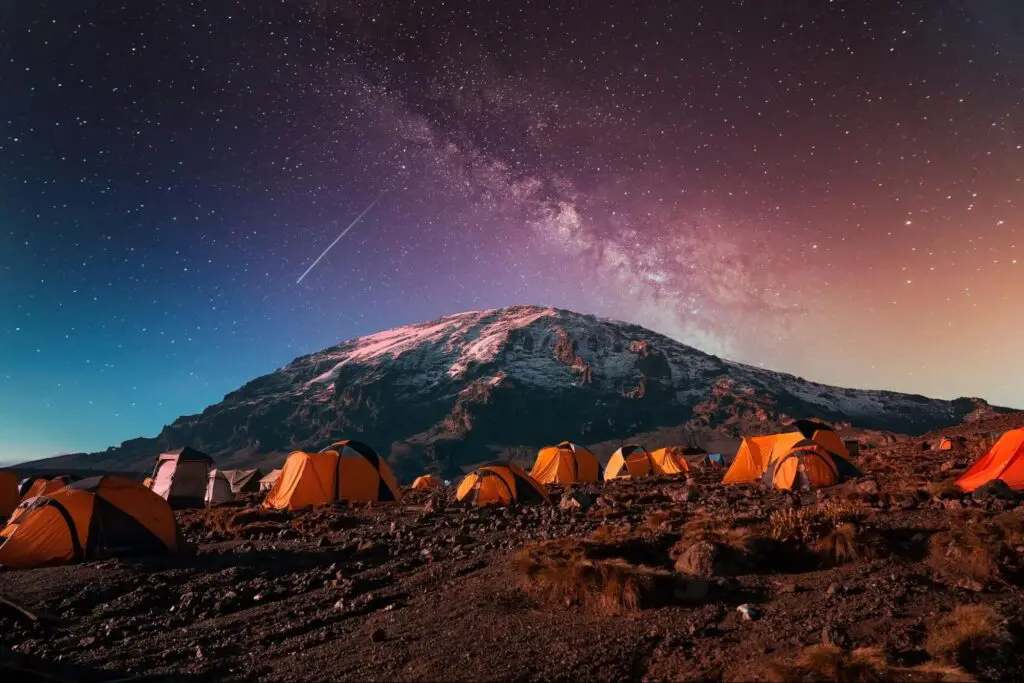
One of the most fascinating aspects of Kilimanjaro’s location is how its height forces a traveler to experience five distinct climate zones in just a few days—essentially traveling from the equator to the Arctic.
| Zone | Elevation | Climate Profile |
| Cultivation | 800m – 1,800m | Lush, humid, and home to local coffee farms. |
| Rainforest | 1,800m – 2,800m | Dense canopy, high moisture, and diverse birdlife. |
| Moorland | 2,800m – 4,000m | Open shrubland with unique flora like giant lobelias. |
| Alpine Desert | 4,000m – 5,000m | Harsh, rocky, and lunar-like with low oxygen. |
| Arctic | 5,000m – 5,895m | Frozen, glacial, and true high-altitude terrain. |

Why the Location Matters for Your Climb
Because Kilimanjaro is a free-standing volcano, it creates its own microclimates. Unlike mountain ranges where you might traverse between peaks, here, you are committed to the vertical ascent of this single massif.
Read more about choosing the best route for your fitness level
The fact that it sits near the equator but maintains glaciers is a geological rarity that is unfortunately changing. We have observed the receding ice caps over the years, which makes the experience of reaching the snowy summit feel even more precious and fleeting.
RELATED ARTICLE: Common Training Mistakes to Avoid Before Climbing Mount Kilimanjaro
Comparing Kilimanjaro to Other Peaks
Many travelers ask us how Kilimanjaro stacks up against other famous climbs in the region.
Mount Kenya: Located in Kenya, it is technically more difficult and requires actual climbing gear. Kilimanjaro, by contrast, is a high-altitude trek that requires determination rather than technical mountaineering skills.
The “Roof of Africa” Advantage: Because of its unique location and non-technical nature, it remains the most accessible high-altitude challenge for adventurers who want to experience true altitude without needing to be professional climbers.

Frequently Asked Questions
1. Is Mount Kilimanjaro in Kenya or Tanzania?
It is located entirely within Tanzania, although it sits quite close to the Kenyan border.
2. Why is it called a “free-standing” mountain?
Unlike the Himalayas or the Andes, which are part of massive mountain chains, Kilimanjaro rises independently from the surrounding plains.
3. Do I need a permit to enter the area?
Yes, the mountain is protected within Kilimanjaro National Park, and all climbing expeditions must be registered and guided by licensed operators.
4. How does the location affect altitude sickness?
The rapid transition through different climate zones means your body experiences significant atmospheric changes quickly. This is why we always recommend longer routes (like the Northern Circuit) for better acclimatization.
5. Is the mountain still active?
It is dormant. While the last major eruption was 360,000 years ago, there is still some thermal activity deep underground.
RELATED ARTICLE: Can Children Climb Mount Kilimanjaro? Everything You Need to Know
The Final Verdict: Why Tanzania Safari Experience?
Planning your trip to Mount Kilimanjaro requires local knowledge that goes beyond maps. At Tanzania Safari Experience, we live and breathe this mountain. We understand the nuances of the local weather patterns, the best times to avoid the crowds, and the importance of pacing to ensure your success.
View our curated Kilimanjaro climbing packages for 2026
We don’t just take you up a mountain; we ensure your journey is authentic, safe, and deeply connected to the land. When you climb with us, you are joining a team that respects the mountain’s majesty and understands the local culture that makes this region of Tanzania so special.
